Skip to content

Muntjac Magazine

4th world Anarchists for a magazine as a community resource by us, for us.

  • Magazine
  • Recent Posts
  • Articles
  • Submissions
  • Zines & Merch
  • Anarchism In Sudan Archive
  • About & FAQ
  • Current Issue

Month: December 2024

Marion Koshy – Eulogy For Houston SRA 

Posted on 14/12/2024 - 14/12/2024 by muntjac

This peice was featured in Muntjac Magazine Issue 1

For the first time in a long time, I opened my organizing e-mail. I expected an invitation to a membership orientation for another organization, however, I received an unexpected message informing me about the shutdown of the Houston Chapter of the Socialist Rifle Association (“SRA”). A mix of emotions swept over me, but i felt some sort of sorrow. It wasn’t wholly unexpected, the chapter had been bleeding in terms of activity for over a year, and for months now, less than a handful of people attended the weekly meetings. The Chapter Central Committee had put forth a “death date” that already passed months ago, and I suspected the only reason why it came now was that everyone remotely involved in organizing in the Houston SRA finally decided to pull the trigger through a haze of burn out.

It might be a faux pas as an anarchist, specifically one that disavows left unity and is somewhat of a sectarian, to mourn the passing of a chapter of the Socialist Rifle Association. However, it was precisely because of my experience in the Houston Socialist Rifle Association that shaped me into becoming the anarchist I am today. I first hand experienced the failings of left unity, and the drawbacks of a bureaucratic socialist organization through the Houston SRA. Beyond that, I had a long history with the Socialist Rifle Association in general.

As a brown person in America, I always knew that my existence was under threat. Especially as someone who was born after 9/11, I was intimately familiar that because of my brownness, I was seen as a “terrorist”. I was one of the few South Asian students in my school, and I frequently faced verbal abuse and marginalization because I vaguely looked “middle eastern”. In fact, a common “joke” in my middle school was that I was “most likely to become a terrorist”, and this perception was not helped by my inept social skills which was significantly exacerbated by my Autism and ADHD.

This fear continued to grow when Donald Trump got elected on a platform of xenophobia. The mask fully slipped off, and it was clear that to some, in order to “Make America Great Again”, it meant “Make America White Again”. I was 14 years old at the time, and incredibly disillusioned at the time, I decided that liberalism was no longer viable politics for me. A system that fundamentally allowed open white supremacy in mainstream politics despite decades of so-called “progress” was not a system I could be invested in. I turned towards left-wing politics. I searched on the internet for spaces that embodied this new world view of mine, and I came across a few subreddits (I know, I was a redditor.), including the Socialist Rifle Association. I specifically re-call thinking to myself, “Well, if there’s a conservative organization called the ‘National Rifle Association’, there ought to be a Socialist Rifle Association.” To my surprise and excitement, I found the Socialist Rifle Association.

I followed the subreddit since then, but it was not the catalyst of my political development. That came from other conversations with likeminded people on other areas of the internet, but I still held the desire to learn self-defense from a left wing perspective. I saw posts praising community defense organizations like “Redneck Revolt”, and the thought of leftists actually fighting back against an emboldened and militarized right appealed to me immensely. I joined a Socialist Rifle Association Discord and mostly lurked there. I gleaned some perspectives on firearms and community defense from a leftist perspective, and I was happy to be in a space where self-defense against white supremacy was especially advocated.

I joined the actual Socialist Rifle Association a few years later, as soon as I turned 18. In the aftermath of the George Floyd Uprising, it felt important to be part of a space that actively taught marginalized people to defend themselves from oppression. It was almost the biggest space and most accessible space for that information. After a brief discord video interview, I joined the Houston Chapter of the Socialist Rifle Association.

Life got in the way, especially as I was starting college. I never became active until a particularly traumatic breakup, and I decided the best use of my free time was to be spent organizing. I took stock of all the leftist organizations I joined at the time, and I decided to throw myself into the Houston Chapter of the SRA.

A core memory of mine was driving nearly an hour to a gun range for a range day with some of my high school friends who were also like minded. We were some sort of affinity group and we were especially radicalized. We were all very excited, but also very scared. We were black and brown teenagers, and the day before we all went to Academy to get some ammo for the expropriated .38 Special Revolver that a friend took from his far right god father.

We were quite late to the range day, and no one was there to introduce themselves to us. The range day organizers left us to our own devices, a bunch of young black and brown teenagers, with a .38 special in a plastic bag to figure out membership. By the time we got to the range, almost everyone left. But one of the range day organizers let us shoot the last of his 9mm out of his CZ Pistol. It was my first time shooting. The gravity of the situation set in as I loaded the magazine, my hands trembling and my palms were especially clammy as I wrapped my hand around the grip. The comrade who owned the pistol casually showed me how to properly hold it, and how to properly stand. My finger pulled the metallic trigger, and a ferocious bang escaped, and I flinched greatly due to the loud sound.

There was something to be said about political power flowing out of the barrel of a gun. As the slide reset and the casing fell on the wooden range bench, I felt power coursing through my veins. I fashioned myself as a “serious revolutionary” at the time, and to me, firing that CZ was the first step to living out my beliefs. In between January 6th, the George Floyd Uprising, the Pandemic, and other developments, me and my friends felt like we were preparing to fight on the barricades. After I shot the CZ my friends took turns, flinching like I had. We also loaded the .38 special and one by one, shot the revolver. A successful range day by our metrics.

After that range day, I started regularly attending the chapter meetings. Desparate to throw myself into work, I started off as a notetaker. I apparently impressed the Chapter Central Committee with my usage of the basic Google Docs minutes sheet template, and I got ingrained into the culture of the local chapter.

I also helped set up their mutual aid distribution project. It was primarily going out to encampments and handing out supplies. We were rather inexperienced so we ended up having to carry large boxes while hopping fences, over gates, and handing out water and other supplies. We even handed out canned goods too, which reflecting back on, was well-intentioned but rather silly.

I interviewed people for the membership welfare committee, an internal body within the organization responsible for mediating disputes and ensuring that instances of racism, transphobia, and sexism didn’t occur. Despite this, there were a few occassions were such instances happened, which led to a few blowups within the org. An organization that primarily organized around firearm training unfortunately attracts leftists who never learned to shed their machismo. I remember a few confrontations in the organization over this. This experience taught me to look out for such tendencies in organizing spaces.

The stark differences in ideology within the Houston Chapter stood out as well. Everyone from anarchists, social democrats, to hardcore stalinists existed within the chapter and it was the source of a lot of contention in the organization. People often debated both in the voice chat and in the channels, and it caused further strife. Fully committed to left unity, I never participated in these discussions despite calling myself an anarchist, and I tried to be amicable with all sides.

After this, I was voted in as part of the Chapter Central Committee as Secretary. I helped organize their biweekly meetings, and started hosting range days. Despite being a full time college student, I committed to hosting biweekly range days, which helped hone my marksmanship, and I’m especially infinitely grateful for the comrades in the organization who showed me how to shoot, how to clean my guns, and overall be competent in the usage of firearms.

On a similar note, my membership in the Houston SRA helped create many long term relationships. While unfortunately, I have either lost contact, or fell out with some people, I’ve created a few long lasting relationships that exist to this day. Without the Houston SRA, I don’t think I would have been as a prolific organizer that I am today.

On a bigger note, it can be argued that the Houston SRA shares a big responsibility in the formation of SCAO. I, and a few of the members took over the Houston SRA’s unhoused distribution program, and formed Houseless Distro, creating SCAO. The lessons I learned from SRA have definitely transferred over to SCAO. To some extent, SCAO does owe part of its birth to the Houston SRA.

While I spend a lot of this eulogy talking about core memories and positive aspects of the Houston SRA, I think it’s important to note its failings. The constant infighting that happened in the Houston SRA was a product of the SRA’s inherent big tent organizational style. While other organizations such as DSA still continue to move forward in spite of its big tent model, I think that the SRA, through the nature of being an organization that organizes around firearms and self-defense, attracts dogmatic people. Furthermore, there were constant issues of machismo, and the usual instances of sexual assault and abuse, that were particularly more dangerous in the context of a firearms based organization.

The Houston SRA started dying shortly after some of its most committed members decided that the SRA was too bureaucratic, or not ideological enough for their goals. This resulted in several splits that the chapter never recovered from. While there were a few mutual aid events, or socials, or even range days, they started becoming few and far between. Personally, my observation of the conflict within the Houston SRA helped me move past big-tent politics. I also was frustrated by the constant scandals coming out of various chapters, and I decided to focus my efforts on SCAO instead.

I know a few comrades that decided to stay and try to weather the storm. Their commitment to the organization even years after peak activity in the chapter is admirable. I am especially sympathetic because they put so much time and effort to keep the chapter going. However, I think in some ways, maybe firearms advocacy on the left has evolved since then. Maybe the Socialist Rifle Association model of organizing isn’t as viable or popular as it used to be.

An unfortunate by-product of the SRA, not just the organization but its culture cultivated of a sort of left wing gun culture that in some ways, mirrors the right. Fetishization of weapons as a commodity rather than a tool, worshipping the aesthetics of COMBLOC nations, and the idea that community defense only extends to the individual act of buying a gun are issues that I saw repeatedly in not just the Houston Chapter of the SRA, or even the Socialist Rifle Association, but across left wing spaces that advocated for armed self defense.

Furthermore, organizing in Houston is perilous. “Houston” as a region extends more than 50 miles, and having a consistent organization that has reoccuring activities is a challenge. Organizations and local formations come and go, their days are like grass and they bloom like the flowers of the field. I think it might be a bit naive to think that the Houston Chapter would go on for especially a long time.

However, I echo the sentiment in the message sent out to all members of the Houston Chapter of the Socialist Rifle Association. The closure of the chapter is not a loss. It has lead to the formation of multiple local organizations, and it has taught many marginalized people how to shoot, and how to defend themselves. That is a feat that is worth noting regardless. While my heart aches at the closing of this chapter, it serves a lesson that organizations aren’t permanent, and that closure does not mean defeat. We can learn from the failures of the Houston Chapter of Socialist Rifle Association, and come up with questions on how we can do better by ourselves and marginalized people.


Dare to Struggle, Dare to Win.

All Power to the People.
 

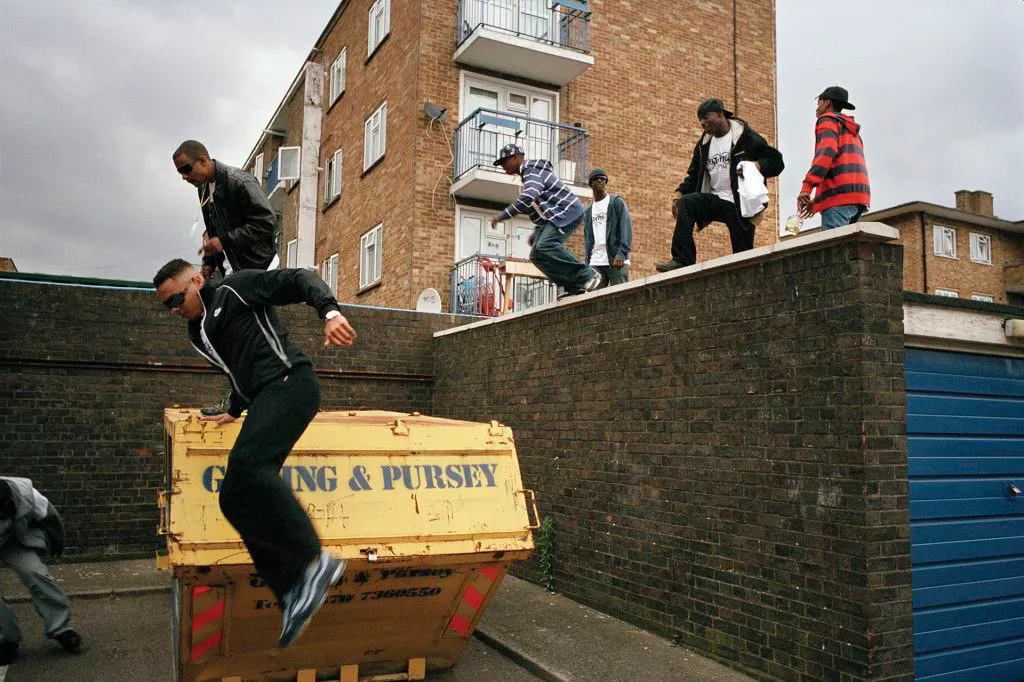
Micelio – Untitled 

Posted on 14/12/2024 - 14/12/2024 by muntjac

This peice was featured in Muntjac Magazine Issue 1

To the rhythm of the spontaneous glissando of the clarinet in the Gershwinian rhapsody, buildings appear on the horizon of what one soon

imagines can be no other thing but Manhattan. An anonymous worker enters the scene alongside the characteristic muted trumpet, and the workday begins. His first action is, naturally, to check his watch: permanence and internalisation of time, reminding him of its scarcity and disturbing the everyday routine from the first minute of the day, slicing time itself and transforming it into something that, like any other commodity, is consumed.

A newspaper flying through the streets reads “jobs scarce,” while a white-collar worker in a diner can’t pay his bill. A zoo of people moves through the monster-city to a rhythm set by clocks and metallic instruments. A century after its debut, the Rhapsody in Blue has evolved along with its audience. From its first listeners in the now-defunct Aeolian Hall to the first frames of Woody Allen’s Manhattan, and into various generations through Disney, in a short film that, while celebrating the history of one of the most iconic cities for bourgeois societies, highlights the working class as the economic and driving force of change, contrasting their role in the production of wealth, both material and cultural, with that of the bourgeoisie.

This constant bombardment of images and slogans is no coincidence. The media through which the bourgeoisie disseminates an ideology that generates a sense of defeat and powerlessness in the face of economic forces have accompanied state apparatuses since the origins of bourgeois societies, disabling worker agency by shaping individual perception into one that feels powerless in the face of the labour market’s blows, halting the formation of groups that could confront the mechanisms by which the gap between social classes widens.

In Latin America, processes of late industrialization at the beginning of the 20th century were surrounded by the creation of an institutional framework centred on labour exploitation. In several Latin American countries, large extraction companies were established in regions favourable to mining activities. Management began to instil an industrial capitalist ethic of time and work, and one of their main strategies was to promote the traditional family structure. Under an extractivist and patriarchal logic, neighbourhoods, schools, roads, and recreation spaces were created so that new generations could serve the extractivist capitalism that mostly benefited the U.S. It was in these working-class

communities that struggles to balance working conditions within production centres arose, and a marked tendency to defend the right to unionise spread throughout the 20th century, same which has declined with the neoliberal turn and is now in crisis in many countries. History gives us an example from 1974: the Cinsa-Cifunsa strike in Saltillo, capital of Coahuila, on the Mexico-U.S. border. The company employed 10,000 workers, representing 10% of Saltillo’s population at the time and, as often happens in Mexico, had a protectionist union aligned with the government under the Confederation of Mexican Workers (Confederación de Trabajadores de México, CTM), which helped simulate any contractual regulation and protect its own interests. Led by 23-year-old Salvador Alcaráz, factory workers rejected the collective labour agreement with the CTM and called for a strike, demanding a 35% wage increase. Initially, they achieved victory, that in the medium term, due to pressures from the government, in collusion with business owners, the church, and the media, got undermined. After the movement was dismantled, Saltillo became a city where it is common practice for foreign automotive companies to invest and abuse the economic and political power granted by the Mexican government and phoney unions.

From a classical Marxism perspective, unions are seen as having political potential capable of undoing the progress made by employers and providing a platform that, in seeking the association of the working class, offers means to fight for the suppression of competition in the market, driven by commodified labour sold to corporations. After all, wage labour rests on the competition workers have among themselves within the market, and the pattern of industrial progress paradoxically creates conditions for workers to unite in groups that advocate for shared goals. The optimism with which unionism has been viewed is, however, nuanced within the same Marxist tradition: the nature of wage labour generates struggles that seek to improve the sale of their commodity (their labour power) without having revolutionary power to combat capital. The spontaneity that union movements may or may not claim is subordinated to bourgeois ideology and is therefore criticised for deepening workers’ ideological enslavement by the bourgeoisie.

It is important to nuance the different theoretical readings of the importance of union movements as engines of radical change with the field experience in multiple locations. There is no simpler way to explain the formation and importance of unions than by understanding the need workers have to organise and defend their rights, to push for their own interests, which are opposed to those of factory managers. No bureaucracy, reformism, or state coercion has removed the right to unionise. The fact that unions nest in production points gives them a fundamental tool in their battles against capitalism. While not all demands can be won within the jurisdiction erected by bourgeois society, even the most bureaucratic union can create cracks that shake employers, generating circumstances that clash with the imperatives of a capitalist state. In unionism lies a communal union in spirit, unable to be fully integrated into the society of which it is a part.

Setting aside any theoretical debate about the effectiveness of unionism as a revolutionary force, the reality is that class domination in modern societies can be (and is) challenged by collective experiences in the struggle to defend our rights. In this context, the axis of action in the workplace is revealed as a vehicle through which collective power can not only change the material conditions of those who offer their labour power but also revive the collective imagination around better possible worlds, introduce new myths that allow us to move toward them from multiple fronts, and defeat current narratives of progress that plunge people into a defeatist nihilism, obscuring the structural causes of social, economic, and environmental collapse.

In Colombia, for example, working women organised to expose the false “labour peace” and perpetuation of gender roles. In February 1920, four hundred women and one hundred men from Colombia’s largest textile factory, the Medellín Textile Company (Compañía de Tejidos de Medellín), went on strike. After twenty-four days of striking, the demonstrators won recognition of their demands: a 40% wage increase, the reduction of the workday to nine hours and fifty minutes, the regulation of the fine system, and better hygiene conditions. They also succeeded in firing supervisors accused of rape and administrators hostile to the workers. In Mexico, during the 70s, a group of Maoist workers within the Volkswagen (VW) factory in Puebla managed to break away from a corrupt industrial union tied to the CTM. They formed an independent, democratic union, with regular elections and collective bargaining that improved their working conditions.

In September 2024, this very same union achieved a 10.59% wage increase. In the same month, VW announced the closure of its factories in German territory due to internal costs, putting more than 300,000 workers’ jobs at risk and shifting labour costs to cheaper markets, showing the neocolonial nature of modern industry.

Among unionist movements, there are various currents that today seek to rebuild the class consciousness that neoliberalism has eroded. For different collectives, the urgency of reclaiming the historical causes of the workers’ struggle has become clear: reduction of working hours, dignified working conditions, collectivization of labour, redistribution of profits, etc. In the search for new horizons of struggle, it is necessary to rescue the historical vehicles of resistance while undermining the mechanisms that have allowed the bourgeois state to reinforce a production system that not only exploits workers but also spreads a subjectivity that seeks to render us inoperative in the face of systemic injustices.

Not all struggles against labour precarization on the periphery arise from coordinated union movements: we know that the state and employers have co-opted many unions, that the union figure, in its current form, is a conduit for workers’ demands but also a brake on their resistance. We also know that thousands of workers fight from their daily routine, individually or collectively, and that on the margins of unionism, they explore, weave, and form various strategies to build movements that allow them to reclaim their workplaces. Increasingly, cross-border solidarity networks are emerging as vital forms of resistance and support for clandestine struggles and direct action. We call on every worker to not let go, to not lose the dream of creating independent unions that break free from corporate powers.

The spirit of communal union knows no borders, and through solidarity we will be able to resist the storms to come, and find platforms to reimagine ourselves.

Micelio are a small collective collaborating with independent industrial unions in northern Mexico. 

You can follow them on twitter @MicelioRojo & on Instagram @micelio_rojo 

Sunwo – On the Forgotten so-called Race Riot.

Posted on 14/12/2024 - 16/12/2024 by muntjac

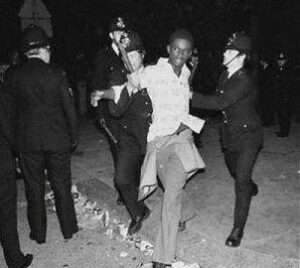
In 1958, at a pub in St. Ann’s, Nottingham, police were called in response to a disturbance. Eyewitnesses reported that it all kicked off over the refusal of service to an interracial couple, sparking a brawl. Some say over 1,000 people were involved; others put it in the hundreds. Either way, chaos filled the streets. If you look at the newspapers from the time, it’s all about “Black violence” and how many white people were injured. But here’s the thing—the evidence points to much of the violence being led by a white mob.

Let’s be clear: this wasn’t a race riot like they like to call it, this was a fascist attack, a pogrom. Black people who were there say white individuals from outside St. Ann’s showed up, forcing the community to fight back and protect themselves. The participation of potentially hundreds of white individuals was historically downplayed. Only through community accounts and extensive archival research has it become possible to uncover a clearer picture of what really went down. Another overlooked aspect is the prolonged police presence—sticking around for weeks afterward.

A few days later, another uprising happened in Notting Hill, some say that this uprising was spired on by the happening in Nottingham, where black forks had managed to fight off a racist mob. These encounters with white reactionary violence mark a pivotal time in the black experience in Britain.

This happened ten years after the first voyage of the Empire Windrush. The early immigrants of color in the UK tell a story of exclusion. Caribbean immigrants faced serious barriers to housing and employment, despite being invited to Britain to address labor shortages after World War II. They ended up making homes in cramped Victorian terraces, originally built for mill workers. While the country relied on immigrants, they were treated like outsiders, unable to access social spaces freely, unable to participate fully in society.

The Colour Bar in Britain worked like an informal apartheid, denying Black and brown people decent jobs, housing, and public spaces. It lasted in one form or another into the 1980s. Beyond that, they struggled just to have a normal community life.

And then there were the Teddy Boys—a racist gang emerging from white working-class youth culture. They harassed Black and Asian immigrants, making it dangerous to access certain areas. People who lived through it say this kind of intimidation carried on into the ’80s. Let’s face it: that same culture seeped into the punk scene of the 1980s. If you’ve ever seen This Is England, you know what I mean.

Through self-defense and resistance, Black and brown communities carved out their own safe spaces. They stood up against violence and refused to accept their assigned place in a racist hierarchy. It is not a coincidence that the conflict arose from the refusal of service of a interracial couple. It’s obvious that reactionary violence is tied to the insecurities of white working-class social conditions, tools used by those in power to spawn hate against marginalized groups. For black and brown people in the UK, Self-defense and rebellion became liberatory tools—to protect the community, to demand better treatment, and to push back against structural barriers enforced by the state.

So maybe we need to rethink the language we use. Instead of calling it a “race riot,” we should recognize it as a form of uprising, a rebellion, a moment of resistance. “Race riot” plays into the same old narratives that pit both sides against each other. Let’s call it what it was: an act of resistance.

Sources: 

blackpast.org/global-african-history/nottingham-riots-1958

bbc.co.uk/news/uk-england-nottinghamshire-45207246

libcom.org/article/1958-nottingham-race-riots


naga – Fear, Safety and Representasians

Posted on 14/12/2024 - 14/12/2024 by muntjac

This essay is featured in Issue 1 Of Muntjac

NOTE: In this piece I use the terms “(British) East & South East Asian” (BESEA) and “Asian American”  in a loose, critical way. It names a particular tendency and group of people who engage in such politics, the sort that might self-characterise as being “anti-covid hate” or “Stop Asian / AAPI / ESEA Hate”. My comrades and I remain sceptical that a “(B)ESEA” political identity as recoverable even as we sometimes organise under it to do certain things. 


I am writing to sketch out the current reactionary basis for community self-defence in Asian American and BESEA politics. Instead of continuing to beg for crumbs of state validation and protection from cops, we need to continue the proliferation of resistance against state violence.


We’ll begin with a brief description of the situation in the so-called U.S., as BESEA groups appear to view Asian American activity as somehow more advanced and it’s important to show this is not the case.


From 2021 onwards, various news articles in the so-called US reported a rise in Asian Americans taking self-defense classes [1] and purchasing guns. [2] This was in response to an escalation in racist street violence against Asians; the attacks which gained the most media attention created a narrative of white male vigilantes or Black homeless men specifically targeting Asian American women and elders. Anti-Black racism is inherent to these politics. While some Asian American organisations might post instagram slides that celebrate Juneteenth or offer condolences for Black victims of police violence, it’s clear from the rest of their social media messaging, co-operation with similar organisations, state bodies and public figures that their primary goal is assimilating Asian Americans into the colonial violence inherent to the US state through the protection of private property. A previous realisation of such politics includes the so-called Rooftop Koreans, petit bourgeois Asian settlers who sought to defend their businesses during the L.A. uprising in the 90s by attacking Black people.[3] It is therefore no surprise that when community self-defence is grounded in Asian American “Stop Asian Hate” (SAH) politics, its participants fill the role of self-deputised police rather than opposing state violence and neglect.


And yet there is a contradiction: for all their messaging that Asians need to be responsible for protecting “our own”, SAH social media content is largely aimed at applying pressure on police to investigate violent attacks and indeed all racial animus as “hate crimes”, celebrating weighty sentencing that apparently shows the state considers such animus as injurious to its own social body. [4] Journalist Esther Wang reported on such ‘desperate, confused, righteous’ politics of SAH in 2022, focusing on the aftermath of Christina Yuna Lee’s murder by a street homeless man from a nearby encampment. She writes, ‘A bitterness was beginning to take hold — a sense of grievance that was hardening into a politics of self-protection.'[5] Her article describes in detail the reactionary bent of SAH politics: Christina Yuna Lee’s former landlord carrying a taser and pepper spray in order to attack homeless people, community objections to any housing support for their neighbours on the street, and Asian self-defense training clubs that espouse theories of racial self-interest. Wang makes clear that while such paranoid responses have an understandable root cause, they’re not solutions to deep societal problems or everyday trauma.


In all this, it’s made clear the condition of being made vulnerable to homelessness, of gentrification, displacement, criminalisation and incarceration, is not understood as violent within the rubric of SAH politics. The reality of the U.S. as a settler-colonial project and how it constructs and orders race to situate certain populations close to death in literal spatial terms is seen as merely aberrant, rather than consistent with its death-making project. A slightly more canny tendency of SAH politics pays lip service to non-carceral advocacy, which can be seen in recent Stop AAPI Hate statements condemning the killings of Easter Leafa, Victoria Lee, and Sonya Massey[6] by police which consistently call for ‘in-language’ and ‘culturally sensitive’ responses to mental health crises, demanding ‘accountability’ for this ‘misconduct.’ Again, the idea that such violence is entirely consistent with the state is not permitted; it would interrupt their redemptive fantasy of the state as an all-giving caregiver who simply needs to draw its lesser favoured child closer to its breast.


This is what abolitionist Dylan Rodríguez describes as the ‘”Asian Exception”‘; “Black on Asian” violence is but one folkdevil used to kick dirt over the tracks of what Rodríguez calls ‘white nationalist, domestic warfare totality’ for which state-enforced punishment of individualised perpetrators is an insufficient response as said totality is ‘a) cold-blooded as fuck, and b) doesn’t give a shit about individuals in-and-of-themselves.’ [7] Citing critical Asian American organising by sex workers, abolitionist feminists, and prisoner support campaigns, Rodríguez encourages us to join the call for ‘collective practices of revolt, solidarity, creativity, and mutual aid that de-prioritize condemnation of individual perpetrators (Black, Brown, and otherwise) and cultivate infrastructures of accountability to other communities, organizations, and movements struggling for liberation from antiblackness, colonial domination, and asymmetrical domestic war.’ Rodríguez consistently draws attention to his own contradictory position within his own academic dayjob, observing that this position is filled with people whose embrace of liberal pacifism means they have a ‘knee-jerk aversion to guns and firearms.'[8] Because they prioritise individual knowledge extraction rather than being open to collective militancy, these people can be a real security risk to movements who see the necessity of self-defense.


You will never find me condemning armed resistance anywhere in the world. However, as I was researching community self-defense in an Asian American context, various critiques came to mind – mostly that armed struggle in the so-called U.S. has become synonymous with U.S. gun culture.


For example, Yellow Peril Tactical is an Asian American armed leftist pro-gun rights group with the aim of educating and training people in firearm handling, tactical training, and community defense. They also build connections with other armed leftists groups and medics, sharing this knowledge through their podcasts. They situate their project as an intervention in reactionary self-defense. All of this is valuable. However, as I listened to their discussions, I started thinking that perhaps some armed leftist groups position themselves as a subset within US gun culture who wish to explore their militarised hobby, rather than politicised organisations who have strategised the necessity of taking up arms through their own analysis of the state monopoly on violence.


I also noted that while there appears to be a willingness to wield coercive force, this sits alongside rather limited ways of looking at representation. For example, YPT’s inaugural podcast episode in 2021 began from the point of diversifying gun culture, with one speaker complaining about how hard it was to be a queer Asian woman in the gun world, and another speaker chiming in that there were now more diverse gun influencers. But I kept listening, and though I personally felt mildly irritated to hear this couched in terms of “misconceptions”, “representation” and “diversity”, YPT essentially described a serious situation where self-deputised white supremacist forces dominate the distribution of and training in firearms. YPT is also clearly interested in building meaningful solidarity across borders: they collaborate with various groups, raise funds for the village of Jinwar in Rojava as well as insurgents in Myanmar, which further clarifies their politics radically differ from the average liberal.


While YPT still proceed from an embedded position in U.S. gun culture, they are clear that firearms are to be used in specific situations and share information about different interventions, such as de-escalation, and complement tactical knowledge with field medicine. ‘Guns are not a talisman,’ YPT write in a recent infographic. [9] This ironically echoes a line in An Anarchist Anti-Gun Manifesto: ‘I think people acquire guns because of the fantasy of possessing hyper concentrated power.’ [10] This manifesto de-naturalises the role of guns in armed resistance, encouraging the expropriation then destruction of such weapons while  keeping in mind there are other ways of wielding force in domestic warfare.


Asian American organising is of course much more varied than the liberal NPIC or armed leftists, but I focused on these aspects as I feel it is currently under-theorised.


We now turn to the situation in the UK, which is similarly captured by counterinsurgency. The same calls for Stop Asian Hate rang out with predictable politics: a so-called Demonstration of Unity rally in spring 2021 collapsed due to brave groups[11] and individuals that refused to work with a speaker who was the subject of the Solidarity not Silence campaign about misogyny and abuse in music.[12] Liberal and conservative BESEAs do not have working analyses of how power structures function – they think capitalism and its concomitant violences are fine, their horizon of radical change being improved access for BESEAs. Add to this bizarre, self-fulfilling, British-poisoned Asian exceptionalism with its foundational anti-Blackness – animated through a frankly deranged focus on joy, food, and hate crime by NPIC careerists for whom small business ownership is their family background and political subjectivity – and you have the current BESEA movement in a nutshell. (Notable exceptions include the abolitionist tendency in some groups within ESEA Sisters; Remember & Resist;[13] and sex worker organising such as Sparrow’s Wings, not to mention individual Asians active across various solidarity movements, including antiraids networks.)


The situation in the UK can still be neatly described in The Monitoring Group’s statement about another rally later in 2021: ‘We asked the police to be present at the rally to ensure there would be no breach of peace. They requested further information and intelligence supporting our concerns. This was provided to them within minutes of their request.’ [14] The current BESEA political landscape is characterised by nonprofits and high-profile charitable individuals in full, unquestioning, eager co-operation with the state. Everybody circulates around the axis of “hate crime prevention”, for which a more comprehensive state surveillance is the solution. This is their goal and they refuse to see any other approach as valid, such as the abolitionist strategy of within and against realistically assesses what happens when the state intervenes in marginalised communities and situations with vulnerablised people.[15] BESEAs do not really have values that derive from the abolitionist tendency–for them, it’s radical to collaborate with hate crime charities to deliver bystander intervention workshops. You won’t find them at copwatch meetings learning about police interventions because that would mean caring about people other than themselves.


BESEAs are self-righteous about this self-interest because their political identity is based on being uniquely downtrodden and ignored. They don’t historicise Asian identity within the larger context of both colonial labour and colonial middlemen; they refuse any critical engagement with these contradictions. Rather, they propagandise narratives of the hardworking migrant rejected by both whites and other racialised groups; they write exhausting books and articles, appear on morning TV segments, curate whole exhibitions, circulate around the Having Conversations Industrial Complex, attend big dos at Buckingham Palace. What is their demand? Visibility–tolerance–and increased hate crime data collection. And afterwards, they’ll grab their newest LinkedIn profile picture.


When the pogroms of 2024 burst forth and communities rallied in the streets against fascists and their pig protectors, these BESEAs sat in their newbuild apartments and cried. They didn’t say, ‘We’re not good in crowds, we can be more useful co-ordinating from home or doing arrestee support afterwards’– no, their relation to these streets is not tactical. They exclusively communicate in a language of fear and unsafety. This was to be expected of the glossy fintech and media types, but a similar response was given by established community services that support migrants on the ground: report all “hate crime” to the police or a reporting service. Community services were in a position to create and share multi-lingual safety plans, to check in with their members and affirm solidarity with targeted groups. Instead, the “hate crime prevention” narrative was in easy reach for everyone, and it will continue that way until a viable alternative program for filling these social needs is created.


Meanwhile, the state’s border securitisation regime continues apace. Undocumented migrants, asylum seekers and refugees experience the sharpest edge of this vulnerablisation. They have also been discarded from the majority of BESEA discourses on public safety. Contextualising the deaths of the Essex 39 and the Morecambe Bay cockle pickers within the Hostile Environment would mean understanding the state as something other than saviour–how these social murders are consistent with its regime.[16]   Similarly, focusing on street attacks rather than how fascist organising works in tandem with state violence means that both material conditions and community needs are obscured. While there is a clear need for multilingual culturally-informed support services, tying it to the success of state-funded hate crime data collection practises diverts attention and resources from actually effective solutions.


Indeed, it is not straightforward for the public to understand how hate crime data is actually used by either police forces or reporting services; thus far there’s been no accountability from the “changemakers” who apparently use this data to make policy changes (for and by whom?). There are ways in which community groups could collect and analyse data using an actively caring methodology and robust ethical framework which targets the root causes of social problems, as shown by the Dying Homeless project by Museum of Homelessness.[17] Otherwise, it appears that a whole panoply of ESEA community centres and migrant support services are being funded, wholly or in part, by the state desire to monitor a narrow category of racial animus by non-state actors. As one possible use of state hate crime data reporting is assigning patrols in certain areas, liberal BESEAs have made it clear they are willing to treat increased police interactions and criminalisation of other communities as collateral.


There would be some utility in abolitionist ESEAs encouraging internal conversations within migrant support services, asking them how they benefit from involvement in this hate crime scheme. If it pays an already overloaded caseworker for a few more hours a week, then it’s important to name that this is not a sustainable solution for making our communities safer. Our responsibility, then, is to propose things that do work and build capacity towards realising this. One example is the community mediator program carried out by Asian American organisers in Oakland.[18] This robust, holistic approach fills many gaps, from intergenerational political education, Black-Asian solidarity, de-escalation, prisoner support, and housing.


Learning from their organising, perhaps our foundation in babylon would be clear, simple messaging that combats a narrative of distrust and fear, all while balancing an acknowledgement of people’s feelings of unsafety. Then, we ask people to really consider what safety means. We have to actually listen–even if we anticipate their answers won’t please us–because it builds trust and can sometimes be surprising. Then, we begin linking the specifics of the ESEA experience to shared material conditions and create accountability to other communities. For these ESEA migrant services and community centres, it might look like making meaningful connections with groups outside of the current hate crime consortium, including but not limited to Black-led abolitionist movements, Palestine solidarity groups, community-led homelessness advocacy, trade and renters unions, queer migrant solidarity and prisoner support.


I sketch out the above even though it seems almost reformist as these services are actually trusted by a sizeable proportion of migrant communities, especially elders who aren’t confident using English. Since it’s impracticable to argue against the existence of such services, we can instead challenge their funding, messaging, and coalitional potential. Our situation differs from that of the so-called US, where the liberal hate crime nonprofits provide no social good whatsoever: they purely exist to propagandise for the police. We have to discern the roles that various groups serve in our communities and drive home how their continued participation in “hate crime prevention” fails to fulfil that need. This happens alongside developing our own abolitionist theory and organising, understanding it must be contextualised as building towards a globalised insurrectionary movement.


The representasian narrative remains so popular exactly because the messaging is simple and self-serving, but it isn’t insurmountable. Indeed, their narrative of racial self-interest, bourgeois aspiration, and failed-assimilation-as-abject-victimhood has has stabilised over the past few years. We know their tricks. We know they’re wrong, and we know they’re scared. They don’t have any new ideas. We want the whole world free, and we have to make that knowledge completely irresistible.


[1] Yasmin Tayag, ‘What I Gained From Self-Defense Class in the Wake of Anti-Asian Attacks’. New York Times, 9 June 2021. [https://www.nytimes.com/2021/06/09/well/Asian-women-self-defense-training.html]

[2] Wufei Yu, ‘The West’s Asian Americans arm up for self-defense’. High Country News, 20 May 2021. [https://www.hcn.org/issues/53-6/south-guns-the-wests-asian-americans-arm-up-for-self-defense/]

[3] Natasha Ishak, ‘The True Stories Behind The ‘Rooftop Koreans’ Who Took Up Arms During The L.A. Uprising’. All That’s Interesting, 5 November 2020.

[https://allthatsinteresting.com/roof-koreans]

[4]theyellowwhistle, ‘So glad to see justice served […]’, Instagram, 30 November 2022. [https://www.instagram.com/p/ClmDicTps2b/]

[5] Esther Wang. ‘How to Hit Back: the desperate, confused, righteous campaign to stop Asian hate.’ NY Mag, 26 September 2022.

[https://nymag.com/intelligencer/article/stop-asian-hate-crimes-politics.html]

[6] https://stopaapihate.org/2024/07/25/statement-stop-aapi-hate-responds-to-the-murder-of-sonya-massey/

[7] Dylan Rodríguez, ‘The “Asian exception” and the Scramble for Legibility: Toward an Abolitionist Approach to Anti-Asian Violence’. Society and Space, 8 April 2021. [https://www.societyandspace.org/articles/the-asian-exception-and-the-scramble-for-legibility-toward-an-abolitionist-approach-to-anti-asian-violence]

[8] ibid., Robert Sirvent, ‘Cops, Colleges, and Counterinsurgency: An Interview with Dylan Rodriguez.’  Black Agenda Report, 13 Sep 2023. [https://www.blackagendareport.com/cops-colleges-and-counterinsurgency-interview-dylan-rodriguez]

[9] yellow_peril_tactical, ‘Today it’s confirmed that the November […]’, Instagram, 13 March 2024 [https://www.instagram.com/p/C4eBWkvO-kG/]

[10] Ignatius, ‘An Anarchist Anti-Gun Manifesto’, Anarchist Library, May 2023. [https://theanarchistlibrary.org/library/anonymous-an-anarchist-anti-gun-manifesto]

[11] Remember & Resist, ‘Content warnings for posts and caption: sexual violence, harassment/bullying, abuse …’, Instagram, 23 June 2021. [https://www.instagram.com/remember.resist/p/CQd43yPFMxq/?img_index=2]

[12] Solidarity Not Silence, CrowdJustice update, 3 August 2021.  [https://www.crowdjustice.com/case/solidaritynotsilence/]

[13] Remember & Resist, ‘Hate crime legislation can’t—and won’t—save us’, Shado Mag, 3 April 2021.

[https://shado-mag.com/opinion/hate-crime-legislation-cant-and-wont-save-us/]

[14] The Monitoring Group, ‘A statement from The Monitoring Group (30/11/21)’, 30 November 2021

[15] Abolitionist Futures, ‘Addressing Gender-Based Violence’. [https://abolitionistfutures.com/gender-based-violence]

[16] Jun Pang, ‘Don’t call the Essex 39 a ‘tragedy’’, New Internationalist, 25 October 2019. [https://newint.org/features/2019/10/25/dont-call-essex-39-tragedy]

[17] Museum of Homelessness, ‘New research shows 1474 homeless people died in 2023 – a mounting national crisis revealed.’

[https://museumofhomelessness.org/news/new-research-shows-1474-homeless-people-died-in-2023-a-mounting-national-crisis-revealed]

[18] Rosalyn Romero and Momo Chang, ‘Since Stop AAPI Hate, some Oakland Chinatown residents are rethinking crime prevention’, The Oaklandside, 12 September 2024. [https://oaklandside.org/2024/09/12/oakland-chinatown-stop-aapi-hate-crime-public-safety/]

Muntjac Issue 1 – Community Self-Defense Against Fascism & The State

Posted on 13/12/2024 - 09/01/2025 by muntjac

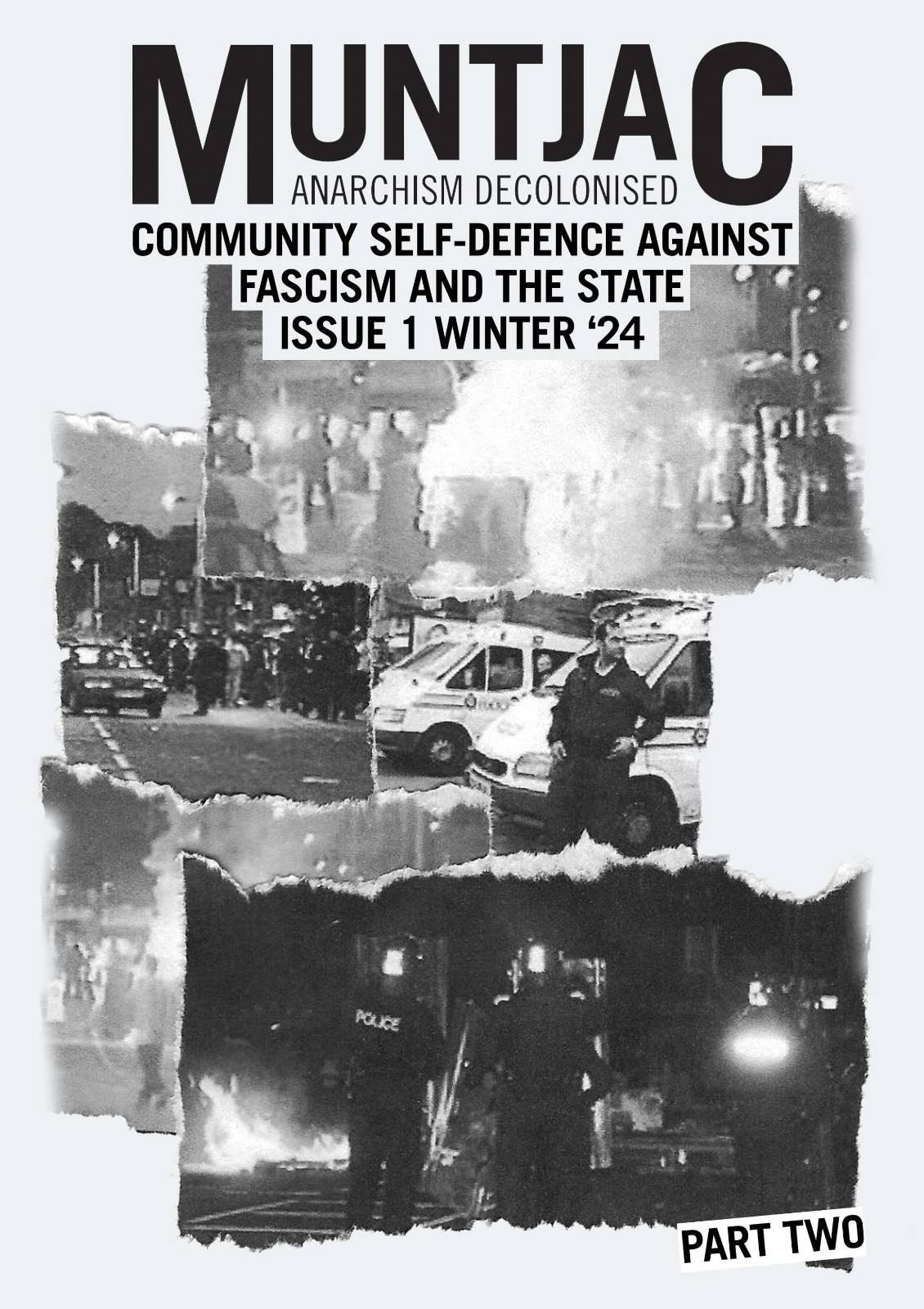
After much delay, we are happy to announce issue 1 of our magazine is finally avalible!

Due to us being too broke to afford large format printing and there being so much text a singular zine would be too complex to bind we’ve done a pair of zines. The cover for the first is clippings from the 60s, 70s & 80s and the cover for the 2nd are from an uprising of South Asians against the police in Harehills, 2001.

Its avalible to download for free here muntjacmag.noblogs.org/mag/ and we them some for sale on our shop ko-fi.com/muntjacmag there are a few spots who’ve already asked to stock the magazine but if you want a bunch of copies please get in touch, we can’t produce huge quanities of the zine oursleves as we only have cheap non-commerical printers. So you’d like bulk copies (20+) get in touch and we’ll pass your message on to our distributor, Seditionist Distribution.

If you’d like to support us in the long run, consider subscribing;

There are three tiers, the first is just to send us a random amount of money (starting at £1) each month and in return you’ll have our eternal thanks. The second is you send us slightly more money (starting at £2.50) and in return you get each issue of the magazine as it comes out. The third is set at a slightly higher rate if you really adore us and have the cash to spend (starting at £8) then you’ll not only get the magazine but also any posters, flyers or other merch we make!  [these rates are the same no matter what country you want things shipped to, with the UK subscribers subsidizing everyone else]

We will try our best to be as transparent as possible with the moneys we are gifted, a long term goal of ours is to eventually pay our authors, but that would require one hell of a lot of subscribers.

Wether or not we get paid, we will strive to keep this project going, even if we have to transfer ownership to another group of people.

Huge thanks to the writers who sent texts in but also to Clash! Collective,  In The Belly and the many people who wouldn’t want us to put their names on a thank-you post for helping make this happen. We’ll be back in the spring! Keep in touch.

Muntjac Magazine.


A Quick Summary;

“On the forgotten so called race riot” – Sunwo speaks on the 1958 Nottingham pogroms and the resistance against it.

Micelio speaks on the union and the revolutionary potential that worker-led, independent communal unions hold

Marion Koshy writes about their entry and experience in the Houston Socialist Rifle Association, and what we collectively can learn from the SRA.

Simoun Magsalin charts a postcolonial anarchism that practices decoloniality without appropriating from indigenous peoples in the Philippines.

A Harrow Antifascist recounts Asian and Black community defence during the UK August race pogroms

Zhachev calls for a rejection of any attempt to demonise or ostracise militant radicals

p.n writes about their experience in a creative residency and the importance of artists being principled (and fiercely anti-zionist).

Ektin Ekdo asks an important question; are we fighting to be part of british society or to destroy it?

naga discusses the reactionary strains of politics that undergird community self-defence around the identities of East and South East Asians in Britain

Sunwo writes against black britishness as an identity, rather searching for a borderless revolutionary blackness.

poet of da soil writes a poem political manifesto on fourth worldism in britain.

In The Belly Zine – Free Polo!

Posted on 12/12/2024 by muntjac

We are sharing this post and appeal from our comrades at In The Belly [bellyzine.net]  A revolutionary abolitionist publication by and for incarcerated people and their communities.

Comrade Pierre “Polo” Pinson was wrongly convicted and sentenced in 1999 to 50 to 150 years for an armed assault on a Pittsburg Police Station and unrelated robberies and is seeking to vacate his illegal sentence

we are mobilizing to raise $5,000 to help retrain Corrie Woods, Esq. on Polo’s behalf. We appreciatre your support in helping us bring him home.

https://opencollective.com/free-polo

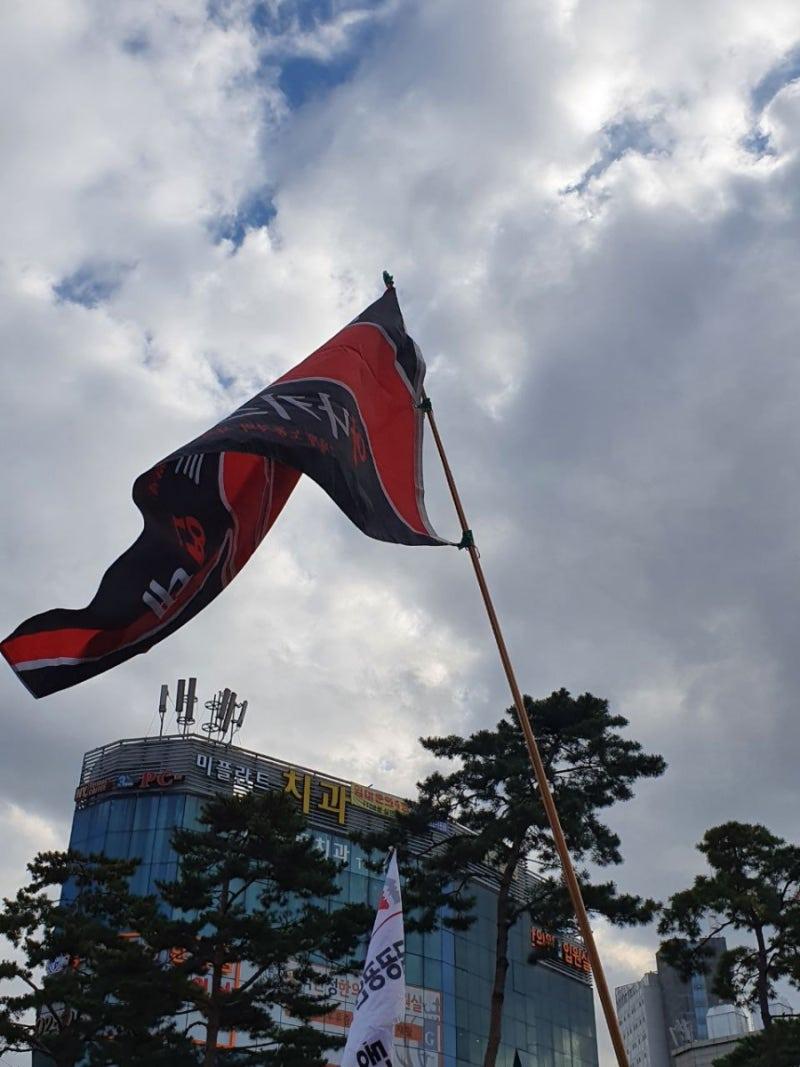
Anarchist Yeondae – 12.03 Our position on the civil war

Posted on 12/12/2024 - 12/12/2024 by muntjac

https://m.blog.naver.com/PostView.naver?blogId=anarchistleague&logNo=223682568029

A post by the Korean Anarchist Organisation 아나키스트 연대 on the shortlived martial law earlier this month and the collaboration between trade unions and liberal politicans which had a dampening effect on the general strike called in response to it.

The night of December 3rd was noisy. I thought that the invocation of martial law was a concept that only appeared in history books and had not been experienced since the 5th Republic. I thought that if the next martial law occurred, it would only occur when something very serious and urgent happened to the system.

But it seems that Mr. President wanted to commit suicide. The only troops mobilized were some defense force troops and a small number of airborne troops, and even that did not prevent the National Assembly from passing a resolution to lift martial law. Neither the representative of the ruling party nor the mayor of Seoul, who was from the ruling party, knew that martial law had been declared. The martial law troops had to return home lonely on police buses.

This could be seen as a great civic victory. But at the same time, it appears to be a defeat for the working class movement.

After martial law was declared, the very small number of mobilized martial law soldiers attempted to make emergency arrests, not Yang Kyung-soo, chairman of the Korean Confederation of Trade Unions, or the chairman of the Public Transport Workers’ Union, which is going on strike starting tomorrow. They tried to arrest Lee Jae-myeong, Han Dong-hoon, and Woo Won-sik. What does this mean? This may have been because, in the eyes of the President, the labor union would not pose any threat to the system nor would it cause any hindrance in any way. No matter how much a general strike is declared, there is no response on the ground, and the Korean Confederation of Trade Unions’ general strike is It is being relegated to a weekend rally, and the workers who came out for the general strike are incited with slogans that are essentially the same as those of the Democratic Party, and in a way, it seems natural.

Let’s be a little ashamed of this. Let’s go back to the field and organize a new struggle again. Let’s organize the field and politicize the field. So that the workers’ struggle can really shake up the system, so that the coming martial law can be truly severe. So that they can be more afraid of our leadership rather than Lee Jae-myung and Han Dong-hoon.

Free Sidiq!

Posted on 10/12/2024 - 02/04/2025 by muntjac

Free Sidiq! 

Sidiq is an anarchist, illegalist and an individualist. On the 12th of July 2024, state authorities had arrested him for cannabis use and possession. He contributes to anarchist publishing and street libraries, involvement in soccer hooligan club, clashes in protests and a passion for writing poetry. Sidiq is looking at a possible 10 year prison term.

His support group are taking donations via paypal at; einzine16@gmail.com

You can write to Sidiq;

Muhammad Ilyas Sidiq
Lapas (prison) Kebonwaru, Kec.
Batununggal, Kota Bandung, Jawa Barat
40272
Indonesia

Sidiq is part of two publishing collectives; Contemplative Editions and Talas Press who publish anarchist books.

Contemplative Editions

contemplative@riseup.net

https://www.instagram.com/___contemplative?igsh=NHdxaXR3cXd6NDJp

Talas Press
https://www.instagram.com/talaspress?igsh=NnRkdmEyd3Ixc3Jh

https://linktr.ee/talaspress

He also writes poetry, one is included below;

PENGAR/Hangover

As long as power stands tall
and threatens the freedom of life.

I will not stop presenting
Rebellion like a robber making chaos
Incarnate pirates along the sea.

Until the rotten colonialists of civilization
will find no more loopholes
Until all is razed to the ground!

Palang Hitam Anarkis (Anarchist Black Cross [Indonesia])

https://www.instagram.com/palang__hitam/

poet of da soil – we turn estate blocks into gardens of eden.

Posted on 09/12/2024 - 09/12/2024 by muntjac

Uploaded with the permision of our comrade and friend, this text is also avalible as a zine via seditionist

Taken from: https://substack.com/home/post/p-146070200

yooooo

eye know that first posts on substacks and blogs and stuff are normally introductory small bites but imma just get straight into it. quick intro name’s poet of da soil. i’m a poet who explores the written word, sound and performance ritual in an attempt 2 load the gun (as ismatu gwendolyn writes about). using substack for my rambles, poems and lamentations about life.

so, autonomy?

in my own personal journey, i’ve come 2 a place where i’ve realised there is no separation between the political and the personal. that every way eye relate 2 others, every way others relate 2 me is built on the systems of domination that the world is also built on. anti-blackness, ableism, classism, (trans)misogynoir among others directly influence and dictate how we interact with one another, which is why eye now believe that autonomy – which the dictionary defines as “the right or condition of self-government,” or as my friend Elizabeth puts it “a refusal to be governed,” is the best way forward to lives that don’t feel like death.

what happens when we refuse to be governed, by a labour or tory party every 5 years, by the state itself, by an international system of capitalism built on the backs of black people for over 400 years(?)

now this can be hard 2 imagine, we’ve been taught that we need the state, with its monopoly over force and violence 2 rule over us or there will be anarchy. chaos.

but what’s chaos if not 1 in 5 people living in absolute poverty in this country, what’s chaos if not 2 million people using food banks in 2023 compared to 60,000 in 2010. what’s chaos if not the constant violence inflicted on black and brown peoples, be it from the police or immigration. the state relegates us (niggas) to economically neglected yet over-policed neighbourhoods, menial jobs and a constant state of barely treading water day by day, pay check to pay check. the time 4 change is now, the time 2 imagine more, of rejecting what they give us and creating our own ways of living.

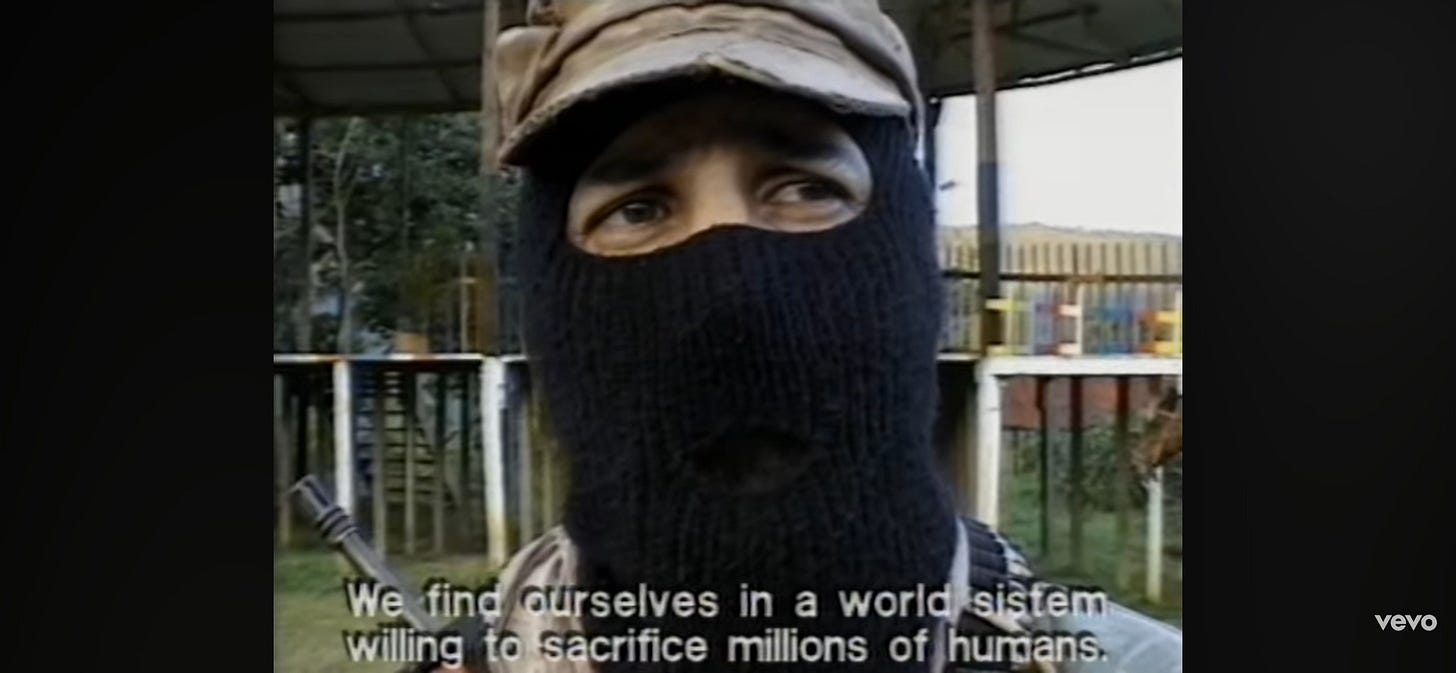
Subcomandante Marcos, credit: Rage Against The Machine YouTube channel.

tha zapatistas(!)

now a whole lot of this seems lofty and abstract but there are countless examples of societies and communities that live and have lived outside the idea of the nation-state, that instead govern themselves and figure out how to exist collectively.

from pre-colonial societies of the Igbo 2 the autonomous region in Syria known as Rojava, people again and again have learned and struggled against oppression 2 live in non-state frameworks.

one of the most successful communities is that of the Zapatistas. indigenous peoples in Chiapas, Mexico rose up in 1994 in what is known as the Zapatistas revolution against the neoliberal policies of the Mexican government that sought to further marginalise indigenous communities and their ownership of the land they lived on.

30 years later, the Zapatistas have collectively organised 27 autonomous municipalities, collectively own and look after the land, built their own healthcare systems, primary and secondary schools and education programmes firmly rooted in their commitment to a struggle for a world where many worlds exist. the Zapatistas are a living, breathing example of autonomy, which they describe as creating new life.

nu life in babylon(?)

so now, what is there 2 be done(?) we are living in a world where multiple genocides are being perpetrated while we live in the belly of the beast that plays a pivotal part in orchestrating em (the West/imperial core).

black and brown communities here in Babylon are bearing the brunt of the violence that the ruling classes of Babylon inflict on its inhabitants, forming internal colonies that are super-exploited by the state.

this can be seen in the disparities faced by these internal colonies in terms of maternal mortality rates, police brutality, underemployment, displacement via gentrification among other things. life aint been good, and it aint gonna get better, unless we say enough is enough and struggle for something more than this. unless we struggle for autonomy.

if autonomy means 2 create nu life, what does that look like(?)

what does it mean 2 create nu life in a world predicated on death? how do we look despair, neglect and violence in tha face and constantly war against that(?)

by pooling our resources togetha, moving togetha, trusting each other and creating programmes and spaces where life can flow in ways tha world doesn’t want. we look 2 tha past and learn how 2 create –

  • housing co-ops that protect tha most marginalised among us, we reclaim spaces and zones that have been captured and simply left 2 rot by tha exploitative housing system.

we turn estate blocks into gardens of eden, with community gardens and food co-ops

  • liberation schools where neglected black kids come and learn english, maths, history, afrikan languages, and whatever they desire all rooted in the knowledge that we all learn from each other , in non-hierarchical modes of educating.
  • we engage in political education – turn back and remember our ancestors and their lessons, commune with those who fought for nu life be it in South Carolina or Azania (known as the settler state of South Africa)
  • we don’t forget our ppl stuck inside the prisons, instead we fight for them because 2 fight for them is 2 fight for us – we remember that the line between citizen and criminal is a blurred one when we all seen as nigg(a)er
  • we provide self-defence classes centred in knowing we live in societies that disable us daily and learn to move with our bodies not against them
  • we provide food and clothes and care and affection for and by everyone.
  • we take over wherever we want and we dance and dance and dance, we hold ourselves and our bodies in poetry and music and plays and art that reminds us black flesh is only as dead as we allow it 2 be.

if autonomy is 2 create nu life it is not resurrection, we don’t hope and long for better days where tha NHS works and tony blair is giving us new pathways while sending us 2 pen and warring 4 oil, we understand that voting doesn’t offer salvation only validation for a system that kills us

if autonomy is 2 create nu life it is not praying 4 rapture and looking 2 paradise or space for an escape out of the dunya

it is not wishing for blackface 2 be our butcher be it prime minister, president or king

it is not seeking internship or degree 2 be free because black excellence isn’t black liberation

it is dapping up a loved one and asking “how far”

not letting go when their head drops a lil as they sigh and say we’re trying

and telling them togetha life can be more than what we are given.

and with that, eye leave you with a poem. peace and one love.

we turn estate blocks into gardens of eden
there are gods who don’t want us 2 bite into fruit and discover our own divinity 
yet we can’t rely on marathon prayers 2 fill our bellies

we sign ballot papers as liability waivers
so MPs get off scot free and drink free wine in their parliament bars
is this what we call democracy (?)
tell ourselves rainbow lies 
like green and yellow might be better than red or blue
like tha colour wheel ain’t mouldy

how long will we wait in supermarket-hospital-jobcentre-immigration office-food bank-hostel-chicken shop queues 
must be why so many black yutes look 2 internship for priority passes
they ain’t know rollercoaster runs on tha blood of their cousins

but its time 2 get off tha ride - don’t u hear em scream(?)
tha smog coats our lungs
netflix covers our eyes
and the latest diss track built on black womyn bruise blocks our ears

time 2 get off tha ride
rub your eyes
breathe in
breathe out 
there is no time but now 
cut apathy off and find a friend in your anger and despair
introduce yourself 2 hope

yeah the ends is being gentrified 
but if our ancestors resisted colonial hands so can we
grab your ppldem, bun a zoot and read some fanon
grab a mask, some gloves and a shovel
babylon ain’t got no claim 2 tha land they mistreat
we are living dead so we rebel w nu life
we turn estate blocks into gardens of eden

further reading:

https://illwill.com/zapatista-autonomy

A piece of writing on the Zapatistas and autonomy.

Subcomandante Marcos (a leader and spokesman of the Zapatista army for national liberation) speaking on the Zaptistas

Ashanti Alston, a black anarchist and former member of the Black Panther Party speaking on the BPP and the Zapatistas.

Posts navigation

Newer posts

"Anarchists know that a long period of education must precede any great fundamental change in society, hence they do not believe in vote-begging, nor political campaigns, but rather in the development of self-thinking individuals."

Lucy Parsons - The Principles Of Anarchism, 1905

Contact us
fawnarchy@grrlz.net
(Signal) muntjac161.96

"Social" Media

Monthly Newsletter (Via Email)

Buy The Magazine / Donate / Subscribe

Send Us Stuff!
We adore books, zines, love letters, posters, and sweet treats.
But please contact us first...

Muntjac Collective
C/O Freedom Press
84b Whitechapel High St
E1 7QX
London
UK

Protect Yourself
AnarSec
No Trace Project
Tor Project
Tails USB

Counter-Info
Act For Freedom Now!
Unoffensive Animal
Unravel
Sans Nom
Switch off! - The System of Destruction
Squat Radar
A2day
Insendier!
Contra Info
Blessed Is The Flame
Avtonom
La Nemesi
Takku
Informativo Anarquista

Police Monitoring
Copwatch Network
NetPol

Stop Deportations
Anti Raids Network
Migrants' Rights Network

Anti Repression Projects
Bristol Anarchist Black Cross
Brighton Anarchist Black Cross
Incarcerated Workers Organising Committee
Palestine Action Prisoners
Lavender Pages (a solidarity project for LGBTQIA+ prisoners)
NYC Anarchist Black Cross
Support Defendants & Prisoners From the George Floyd Uprisings
Prisoner Solidarity
June 11th - International Day of Solidarity with Marius Mason & All Long-Term Anarchist Prisoners
International Week of Solidarity with Anarchist Prisoners // 23 – 30 August

All our publications are free for prisoners.

  • November 2025
  • June 2025
  • May 2025
  • April 2025
  • March 2025
  • February 2025
  • January 2025
  • December 2024
  • November 2024
  • October 2024
  • September 2024
Proudly powered by WordPress | Theme: micro, developed by DevriX.